
The Essence of Strength: Beyond Physical Power to Character and Resilience.


Strength
Strength, in its manifold forms, transcends mere physical prowess or endurance, encompassing a spectrum of qualities that define the essence of masculinity and human resilience. It manifests in physical fortitude, mental tenacity, and spiritual endurance, shaping our character and guiding our actions through life’s challenges.
Strength is not solely defined by muscular power or brute force but is also found in the depth of one’s integrity, the resilience of one’s spirit, and the steadfastness of one’s principles. It empowers us to stand firm in the face of adversity, to uphold justice and honor, and to lead by example in our families and communities. Ultimately, strength is a dynamic force that enables us to protect, provide, and persevere, fostering a legacy of courage and compassion for generations to come.
Isaiah 40:31: "But those who hope in the Lord will renew their strength. They will soar on wings like eagles; they will run and not grow weary, they will walk and not be faint."
Joshua 1:9: "Have I not commanded you? Be strong and courageous. Do not be afraid; do not be discouraged, for the Lord your God will be with you wherever you go."
Timothy 1:7: "For God gave us a spirit not of fear but of power and love and self-control."
Ephesians 6:10: "Finally, be strong in the Lord and in his mighty power."
Corinthians 16:13: "Be on your guard; stand firm in the faith; be courageous; be strong."
Chronicles 15:7: "But as for you, be strong and do not give up, for your work will be rewarded."

Psalm 82:3: "Defend the weak and the fatherless; uphold the cause of the poor and the oppressed."
Hebrews 12:1: "Therefore, since we are surrounded by such a great cloud of witnesses, let us throw off everything that hinders and the sin that so easily entangles. And let us run with perseverance the race marked out for us."
Isaiah 41:10: "So do not fear, for I am with you; do not be dismayed, for I am your God. I will strengthen you and help you; I will uphold you with my righteous right hand."

Physical Strength:
We prioritize physical health and well-being, recognizing it as foundational to a robust and active life. Physical strength is foundational to our well-being, encompassing not only physical fitness but also mental resilience and emotional vitality. We prioritize physical health as a cornerstone of a robust and active life, understanding that it enables us to tackle life’s challenges with vigor and determination. This strength is nurtured through regular exercise, balanced nutrition, and adequate rest, ensuring our bodies are prepared for the demands of daily life and beyond. It involves cultivating discipline in our habits, such as maintaining a consistent workout routine, monitoring our diet, and prioritizing sufficient sleep. Physical strength also encompasses resilience, allowing us to recover from setbacks and injuries, and adaptability, enabling us to maintain our well-being in different environments and circumstances.
Physical Fitness: Physical fitness refers to the overall condition of our bodies, including cardiovascular health, muscular strength, flexibility, and endurance. It encompasses activities such as aerobic exercise, strength training, and stretching, which contribute to improved health and well-being.
Nutrition: Nutrition plays a crucial role in physical strength by providing the necessary fuel and nutrients for our bodies to function optimally. A balanced diet rich in fruits, vegetables, lean proteins, and whole grains supports muscle growth and repair, enhances energy levels, and promotes overall health.
Rest and Recovery: Rest and recovery are essential aspects of physical strength, allowing our bodies to repair and rebuild muscle tissues, replenish energy stores, and recover from the stresses of daily life and exercise. Quality sleep, relaxation techniques, and proper recovery periods between workouts are vital for maintaining physical well-being and performance.

Strength of mind;
Strength of mind combines intellectual and character dimensions to foster resilience, wisdom, and effective decision-making in navigating life's challenges.
Strength of mind encompasses intellectual and character aspects that collectively shape our resilience and ability to navigate life's challenges with wisdom and grace. Intellectual strength involves critical thinking, creativity, and continuous learning, enabling us to analyze situations, solve problems, and make informed decisions. Character strength is rooted in integrity, honesty, and ethical behavior, guiding us to uphold our values and principles even in difficult circumstances. Together, these dimensions of strength of mind foster a balanced and resilient approach to life, enabling us to thrive personally and contribute positively to our communities.
Intellectual Strength:
Intellectual strength includes critical thinking, creativity, and a commitment to lifelong learning. It involves seeking knowledge, analyzing information critically, and adapting to new situations by applying reasoning and problem-solving skills.
Wisdom:
Wisdom transcends mere accumulation of knowledge, embodying the deep understanding and discernment gained through life experiences. It encompasses the ability to make sound judgments, recognize the broader implications of decisions, and navigate complex situations with insight and foresight. Wisdom involves synthesizing information, reflecting on past experiences, and integrating ethical considerations into decision-making. It also includes the humility to acknowledge the limits of one's understanding and the openness to learn from others. By applying wisdom, we cultivate a balanced perspective, foster meaningful relationships, and contribute positively to our communities and the world.
Character Strength:
Character strength involves integrity, honesty, and ethical behavior. It includes making decisions based on principles and values, maintaining consistency between words and actions, and demonstrating accountability and responsibility in all aspects of life.
Emotional Strength:
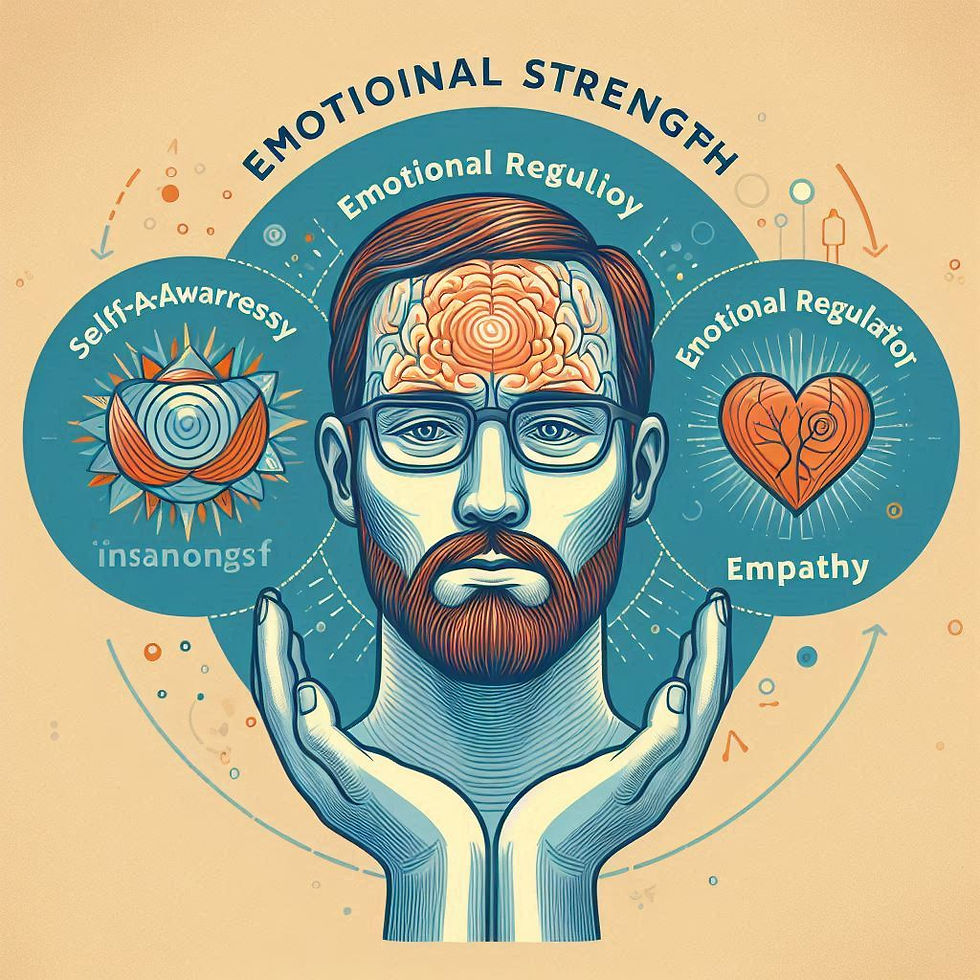
Emotional strength encompasses self-awareness, emotional regulation, and empathy. It involves understanding and managing our own emotions effectively, as well as recognizing and responding to the emotions of others with compassion and empathy. Emotional strength is foundational to our ability to build and maintain healthy relationships, cope with stress, and navigate life’s challenges with resilience and grace. This strength is nurtured through practices that enhance our emotional intelligence, such as mindfulness, self-reflection, and active listening. Emotional strength also includes the capacity to set healthy boundaries, seek and offer support, and maintain a positive outlook even in difficult times.
Self-Awareness:
Self-awareness is the cornerstone of emotional strength. It involves recognizing and understanding our own emotions, motivations, and triggers. Through self-reflection and mindfulness, we gain insight into our emotional responses and develop the ability to manage them effectively.
Emotional Regulation:
Emotional regulation involves managing our emotions in a healthy and constructive way. This includes techniques such as deep breathing, meditation, and cognitive restructuring, which help us stay calm and composed in stressful situations, preventing impulsive reactions and promoting thoughtful responses.
Empathy:
Empathy is the ability to understand and share the feelings of others. It involves active listening, compassion, and the capacity to see situations from another person’s perspective. Empathy fosters strong relationships, effective communication, and a supportive community environment.

Spiritual Strength:
We embark on a journey of spiritual growth, seeking meaning and purpose in life, and finding strength in our faith and connection with the divine.
Spiritual strength is the cornerstone of our inner resilience and sense of purpose, guiding us on a journey of growth and connection with the divine. It encompasses a deep exploration of our beliefs, values, and spiritual practices, fostering a sense of meaning and fulfillment in life. Spiritual strength involves cultivating a relationship with the divine, whether through prayer, meditation, or worship, and finding solace and guidance in times of difficulty. It also includes developing virtues such as compassion, forgiveness, and gratitude, which enrich our lives and relationships. Through spiritual growth, we discover a sense of interconnectedness with others and the world around us, finding strength and peace in our faith and connection with the divine.
Exploration of Beliefs and Values:
Spiritual strength involves exploring and clarifying our beliefs and values. This process may include reflecting on existential questions, examining religious or philosophical teachings, and discerning what gives our lives meaning and purpose.
Practices of Prayer, Meditation, and Worship:
Engaging in spiritual practices such as prayer, meditation, or worship helps cultivate spiritual strength. These practices foster a deeper connection with the divine, promote inner peace and clarity, and provide spiritual guidance and support.
Development of Virtues:
Spiritual strength includes the development of virtues such as compassion, forgiveness, gratitude, and humility. These virtues help us navigate challenges with grace, build meaningful relationships, and contribute positively to our communities and society.

Financial Strength:
We strive for financial empowerment, understanding its role in creating stability and fulfilling our responsibilities to ourselves, our families, and our communities.
Financial strength is a cornerstone of stability and empowerment, enabling us to meet our responsibilities and pursue our aspirations with confidence. It involves managing resources wisely, investing in our future, and securing our financial well-being for ourselves, our families, and our communities. Financial strength begins with a commitment to financial literacy, understanding how to budget, save, and invest effectively. It also includes prudent debt management and planning for emergencies to ensure resilience in times of financial stress. Moreover, financial strength encompasses generosity and responsibility, as we contribute to the well-being of others and support the growth and development of our communities.
Proverbs 13:22 A good man leaves an inheritance to his children's children but, the sinner's wealth is laid up for the righteous.
Financial Literacy:
Financial strength starts with knowledge. It involves understanding basic financial concepts such as budgeting, saving, investing, and managing debt. Financially literate individuals make informed decisions about their money, enhancing their ability to achieve financial goals and build wealth.
Savings and Investment:
Building financial strength requires disciplined savings habits and strategic investments. Saving regularly and investing wisely in assets that appreciate in value over time help individuals secure their financial future and create wealth for themselves and their families.
Community and Generosity:
Financial strength extends beyond personal wealth to include contributing to the well-being of others and supporting community initiatives. Generosity and responsible giving can have a positive impact on society and promote economic stability and growth in communities.


Comments